Scott Smolen Maryland real estate blog with market updates, community spotlights, and home buying tips

Maryland Real Estate Blog

Scott Smolen's Anne Arundel County and Bowie, Md. Real Estate Blog

Local real estate updates, market insights, community spotlights, and practical home buying and selling advice for Odenton, Gambrills, Crofton, Bowie, Piney Orchard, Two Rivers, and the surrounding Maryland real estate market.

Latest Market Trends

Stay current on mortgage rates, local inventory shifts, pricing trends, and buyer demand across the Maryland real estate market.

Home Selling Advice

Learn how to prepare, price, market, and negotiate when selling a home in today’s local market.

Home Buying Tips

Get practical guidance on affordability, inspections, offers, financing, and buying with confidence.

Community Spotlights

Explore local neighborhoods, market reports, lifestyle features, and community insights throughout the area.

March 23, 2026

You Can’t Control Mortgage Rates—But You Can Control This

Mortgage rates have been anything but predictable lately. If you’re considering buying a home, that uncertainty can make planning feel difficult.

But here’s the reality: while you can’t control where rates go next, you can control several key factors that directly impact the rate you secure.

Understanding that difference is what separates a frustrated buyer from a prepared one.


Why Mortgage Rates Are Moving Right Now

Recent data from Freddie Mac shows that after trending downward for over a year, rates have recently ticked back up. That kind of movement is not unusual.

Mortgage rates naturally fluctuate—especially during periods of economic uncertainty or major global events. Financial markets react quickly to new information, and borrowing costs tend to follow.

This is exactly why trying to “time the market” rarely works. By the time you react, the market has already moved.


What You Can Control

While the market is out of your hands, several factors are entirely within your control—and they can make a meaningful difference in your monthly payment and long-term cost.

1. Your Credit Profile

Your credit score is one of the most important factors in determining your mortgage rate. Even a modest improvement can translate into better terms and lower monthly payments. Before buying, it’s worth reviewing your credit, paying down balances where possible, and avoiding new debt.

If you’re unsure where you stand, this is one of the first conversations to have with a lender.

2. Your Loan Options

Not all mortgages are created equal. Different loan programs—such as conventional, FHA, VA, or USDA—come with different requirements, benefits, and rate structures. The right option depends on your financial profile, down payment, and long-term goals.

Many buyers make the mistake of only exploring one option. In reality, comparing multiple loan types—and even multiple lenders—can uncover better opportunities.

3. Your Loan Term

The length of your loan also plays a significant role. Shorter-term loans often come with lower interest rates but higher monthly payments, while longer terms offer lower monthly payments but more interest paid over time.

The right choice depends on your financial strategy—not just what feels comfortable month-to-month, but what aligns with your long-term goals.


The Advantage of the Right Guidance

Navigating these decisions on your own can be overwhelming—and costly if done incorrectly. That’s where working with the right professionals matters.

Scott and The Smolen Team can connect you with reputable, trusted lenders who will walk you through your options, explain the trade-offs clearly, and help position you to secure the best rate possible in today’s market.


Bottom Line

Mortgage rates will continue to move—that’s a given. What matters is how prepared you are when you step into the market. Focus on what you can control:

  • Strengthen your credit
  • Explore the right loan options
  • Choose a loan structure that fits your goals
  • Work with experienced professionals

If you’re thinking about buying, the next step is simple: have a conversation, get clarity on your options, and move forward with a strategy—not guesswork.


 

March 18, 2026

Piney Orchard MD Homes for Sale & Community Guide

Piney Orchard continues to stand out for buyers who want established amenities, commuter convenience, and a community feel that remains hard to match in the Odenton market.

If you are looking for a home near Fort Meade or searching for a community that feels like a year-round resort, Piney Orchard consistently tops the list. It remains one of the most recognized planned communities in the Odenton area for good reason.

From condos and townhomes to larger single-family homes, Piney Orchard offers a broad mix of housing choices along with lifestyle amenities and a location that works well for commuters.

Why Piney Orchard stands out: resort-style amenities, trail systems, preserved green space, MARC access, and close proximity to Fort Meade and major employment centers.

🏊 Resort-Style Amenities at Your Doorstep

One of the biggest drivers behind Piney Orchard buyer demand is the amenity package. Residents do not just buy a home here. They buy into a lifestyle that includes:

  • Three outdoor pools and one indoor lap pool for year-round recreation and fitness.
  • A 45-acre nature preserve with paved and natural trails for walking, running, and biking.
  • A community lake and fitness center that add everyday value and convenience.

🚆 The Ultimate Commuter Location

Location is a major part of Piney Orchard’s appeal. The community is less than two miles from the Odenton MARC Station, which makes it a practical option for people commuting to Washington, D.C. or Baltimore.

With Fort Meade and NSA also nearby, Piney Orchard continues to attract military households, government employees, and other buyers who want a central location with strong daily convenience.

🏠 What Is the Piney Orchard Market Like Right Now?

Piney Orchard continues to attract steady demand across different property types. Whether a buyer wants a condo, townhome, or detached home, the community keeps broad appeal because it offers more than just housing inventory.

Local insight: Piney Orchard’s elementary school, Village Center, and established neighborhood identity help support long-term desirability compared with more isolated subdivisions.

✨ Explore Piney Orchard Today

If you want to see what is currently available, you can browse the latest listings and community information here:

View All Piney Orchard Homes for Sale Here

Piney Orchard community in Odenton Maryland

Thinking About Buying or Selling in Piney Orchard?

The Scott Smolen Team helps buyers and sellers across Odenton, Piney Orchard, Crofton, Bowie, Annapolis, and the Fort Meade area with local knowledge, smart strategy, and experienced guidance.

March 11, 2026

Should You Repaint Your House Before Selling? Pros, Cons, and ROI

When you’re preparing to sell your home, it’s common to suddenly notice every imperfection—scuffed walls, fading paint, or outdated colors. That leads to a key question many sellers ask: Should you repaint your house before selling?

The answer depends on your home’s condition, your market, and your overall strategy—but in many cases, repainting can deliver a strong return.


Why Repainting Before Selling Can Pay Off

A fresh coat of paint is one of the most cost-effective ways to improve your home’s appearance and perceived value.

It helps your home:

  • Look cleaner and well-maintained
  • Feel brighter and more spacious
  • Show better in photos and online listings
  • Appeal to a wider range of buyers

Compared to larger renovations, painting is relatively inexpensive and can help increase your sale price while reducing time on market. Interior painting often delivers one of the highest returns among pre-sale updates, while exterior touch-ups can significantly boost curb appeal.


Pros and Cons of Painting Before Selling

Pros

  • Attracts more buyers
  • Creates a strong first impression
  • Enhances listing photos
  • Can increase sale price
  • Helps homes sell faster

Cons

  • Upfront cost
  • Time required to complete the work
  • Choosing the wrong color can hurt appeal
  • Buyers may still plan to repaint
  • Exterior work may depend on weather


5 Signs You Should Repaint Before Selling

Repainting isn’t always necessary, but it can make a major difference in the right situations:


  1. Your Home Doesn’t Show Well Online If your listing photos feel dark or dated, fresh paint can instantly improve presentation.
  2. There’s Visible Wear and Tear Scuffs, stains, and faded paint signal neglect to buyers—even if the home is otherwise well maintained.
  3. You Have Bold or Outdated Colors Strong or highly personalized colors can turn buyers off. Neutral tones help buyers picture themselves in the space.
  4. You’re Competing With Similar Listings If nearby homes are updated, fresh paint can help yours stand out.
  5. You’re Selling in a Higher Price Range Buyers in higher price points expect move-in-ready homes.

Paint is a relatively simple way to meet those expectations.


When You Can Skip Repainting

There are situations where repainting may not be necessary:


  1. The current paint is clean, neutral, and in good condition
  2. Inventory is low and demand is high
  3. Buyers are likely planning renovations
  4. Your budget is better spent on repairs or staging
  5. The home has unique or historic character where original finishes add value


What Does It Cost?

Interior painting typically ranges from $2,000 to $4,000 for an average home

Roughly $2–$6 per square foot

Exterior painting typically ranges from $3,000 to $7,000+

Roughly $1.50–$4 per square foot

Costs vary based on size, condition, and whether you hire professionals—but even modest updates can make a noticeable impact.


Tips to Maximize Your Return

If you decide to repaint, execution matters. Focus on high-impact areas and prioritize spaces buyers notice most:

  • Living areas
  • Entryways
  • Kitchens
  • Primary bedrooms
  • Bathrooms

Stick with neutral, cohesive colors.  Choose soft, neutral tones that complement your flooring, cabinets, and countertops. The goal is to create a clean, inviting backdrop.


Hire Professionals When It Counts

A high-quality finish makes a difference—especially for larger spaces or exterior work. Pay attention to details, trim, baseboards, and the right paint finish (typically eggshell or satin for walls) help create a polished, move-in-ready feel.


Bottom Line: Is Repainting Worth It?

In many cases, yes—but only if it’s done strategically. If your current paint is worn, outdated, or too personalized, repainting can:

  • Increase buyer interest
  • Strengthen your asking price
  • Help your home sell faster

If your home already shows well, your money may be better spent elsewhere. The key is knowing where repainting will actually move the needle—and where it won’t.


Thinking About Selling? Let’s Talk Strategy

Every home—and every market—is different. If you’re unsure whether repainting is worth it for your property, reach out to Scott and The Smolen Team. We’ll help you prioritize the updates that deliver the highest return, connect you with trusted local professionals, and position your home to sell quickly and for top dollar.


March 7, 2026

What Is a Preliminary Title Report (and Why It Matters When Buying a Home)

Buying a home is an exciting process, especially once you’re under contract. But before you receive the keys, there are several critical steps that must take place behind the scenes.

One of the most important—and often overlooked—is reviewing the preliminary title report. If you’re unfamiliar with what this is or why it matters, here’s what you need to know.


What Is a Preliminary Title Report?

A “title” represents the legal ownership of a property and the history of that ownership over time. Once a purchase agreement is signed, a title company or real estate attorney conducts a detailed review of the property’s title. Their goal is to identify any issues that could prevent the property from being legally transferred to you. The findings are compiled into a preliminary title report, which is then provided to the buyer—typically within a few days.

It’s important to review this report promptly. In most transactions, buyers have a limited window to raise concerns or request corrections. It’s also important to understand that a preliminary title report is not title insurance. Instead, it identifies any potential issues that must be resolved before a title insurance policy can be issued at closing.


Why Is a Preliminary Title Report Important?

The primary purpose of the report is to confirm that the seller has clear and legal ownership—and that no one else has a claim to the property.

For example, the report may reveal:

  • Ownership disputes
  • Outstanding debts tied to the property
  • Legal restrictions that could affect your use of the home

Without resolving these issues, the property cannot be transferred cleanly to a new owner.


Common Issues Found in a Title Report

Your real estate agent and title professional will guide you through the report, but here are some of the most common items to look for:


  1. Mortgage Liens: When a homeowner has a mortgage, the lender holds a legal claim (lien) on the property until the loan is paid off. This must be satisfied before closing.
  2. Tax Liens: Unpaid property taxes—or other tax obligations—can attach to the property. These must be cleared before ownership can transfer.
  3. Easements: Easements allow others to use a portion of the property for a specific purpose, such as utilities or shared access. While common, they can impact how you use the property.
  4. Encroachments: This occurs when a structure (like a fence or driveway) crosses property lines onto a neighboring parcel. These issues should be addressed prior to closing.
  5. HOA Rules (CC&Rs): If the home is part of a homeowners association, the report may include Covenants, Conditions, and Restrictions. These outline rules governing the property, such as exterior changes or usage limitations.


How Are Title Issues Resolved?

If any concerns appear in the report, timing is critical. You’ll work closely with your real estate agent, the seller, and the title company or attorney to resolve them.

In many cases:

  • Sellers will pay off liens or outstanding debts
  • Boundary or encroachment issues can be negotiated or corrected
  • Easements may be clarified or, in some cases, modified

If a serious issue cannot be resolved, buyers typically have the option to withdraw from the contract—especially if a title contingency is in place.


Bottom Line

A preliminary title report is a critical safeguard in the homebuying process. It ensures that you’re purchasing a property with clear ownership and without hidden legal or financial complications. Skipping over this step—or failing to review it carefully—can lead to significant problems down the road.


Have Questions? Let’s Talk!

If you have questions about a title report, the homebuying process, or need a referral to a reputable title attorney, reach out to Scott and the Smolen Team. We’re here to guide you every step of the way and ensure your transaction is handled smoothly, professionally, and with your best interests protected.


March 3, 2026

Why Home Buyers Back Out of Contracts in Odenton, Crofton, Gambrills, and Bowie

Why Home Buyers Back Out of Contracts in Odenton, Crofton, Gambrills, and Bowie

More buyers are canceling home contracts than they were a few years ago. Here is what sellers in Odenton, Crofton, Gambrills, and Bowie need to know before listing a home for sale.

If you have been watching the real estate market lately, you have likely seen the headlines: more buyers are backing out of contracts, and cancellation rates have climbed to levels not seen in years.

That may sound concerning, but here is what most home sellers in Odenton, Crofton, Gambrills, and Bowie need to understand: this trend is usually not random. In many cases, it is preventable.

There is one major reason real estate deals fall apart, and it is something sellers can often address before the home ever hits the market.

The Biggest Dealbreaker: Home Inspection Issues

The number one reason buyers walk away from a home purchase contract is the home inspection.

Once an inspection report reveals unexpected repairs, maintenance concerns, or possible safety issues, many buyers begin to question the deal. In some cases, they ask for repairs or credits. In others, they simply terminate the contract and move on.

In today’s market, buyers have more options than they did when inventory was extremely tight. That means they are more selective, more cautious, and less willing to take on a property that feels risky.

Why This Matters More in Today’s Market

Not long ago, many buyers were willing to overlook issues just to secure a home. Competition was intense, inventory was limited, and buyers often felt they had no room to be picky.

That has changed.

Buyers shopping in Odenton, Crofton, Gambrills, and Bowie today are often looking more closely at condition, future maintenance costs, and the possibility of expensive repairs after settlement. Even smaller concerns can create bigger doubts when buyers are already dealing with higher monthly housing costs.

If a home feels like it may become a financial burden, many buyers will not stay in the deal long enough to negotiate. They will walk away and wait for a better option.

The Issues That Raise Immediate Red Flags

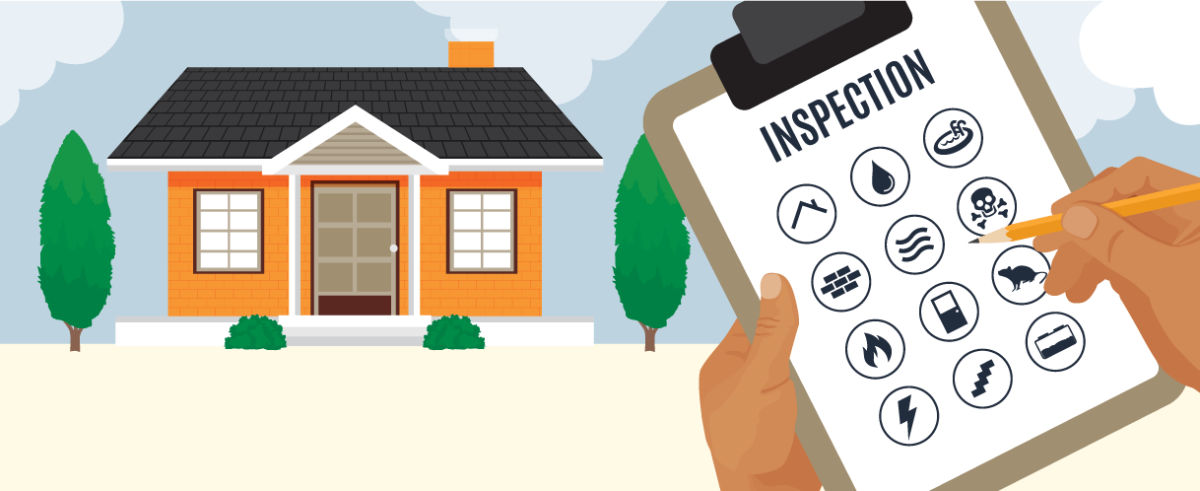
Every property is different, but certain issues consistently cause buyers to hesitate or cancel altogether:

  • Roof damage or active leaks
  • Plumbing issues or signs of water damage
  • Electrical concerns, including outdated wiring or safety hazards
  • HVAC systems that are not functioning properly
  • Pest or termite damage
  • Mold, asbestos, or other hazardous materials
  • Safety or code violations
  • Structural concerns such as foundation cracks or uneven floors

Not every home will have major issues. Sometimes only one or two concerns show up. But even smaller items can create larger doubts in a buyer’s mind, especially when the buyer starts wondering what else might be wrong.

How Sellers Can Get Ahead of Inspection Problems

This is where strategy matters.

Before listing your home, an experienced local agent can help you evaluate the property through a buyer’s lens. That means identifying the issues most likely to create concern, deciding what should be addressed before going live, and avoiding unnecessary spending on updates that will not meaningfully improve your position.

Sellers often make one of two mistakes:

  • They over-improve the home and spend money where they will not get a strong return
  • They under-prepare and leave obvious dealbreakers unaddressed

The goal is not perfection. The goal is to present a home that feels well-maintained, trustworthy, and worth pursuing.

Why a Pre-Listing Inspection Can Be a Smart Move

In many cases, a pre-listing inspection gives sellers a significant advantage.

Instead of waiting for a buyer’s inspector to uncover problems after you are already under contract, a pre-listing inspection allows you to understand what could come up in advance. That gives you time to make informed decisions before negotiations become stressful.

A pre-listing inspection can help you:

  • Address major issues before listing
  • Disclose known concerns upfront
  • Reduce the risk of surprise repair requests
  • Prevent last-minute negotiations that can derail a sale
  • Build buyer trust from the start

Trust matters. When buyers feel that a seller has been transparent and proactive, they are far more likely to stay committed to the transaction.

Why This Matters for Sellers in Odenton, Crofton, Gambrills, and Bowie

In local markets like Odenton, Crofton, Gambrills, and Bowie, buyers are comparing homes carefully. Condition, presentation, and perceived risk all influence whether an offer is made and whether that buyer stays committed once the inspection period begins.

Sellers who prepare properly before listing are in a much stronger position to attract serious buyers, avoid renegotiations, and hold the deal together through closing.

If you are also wondering what your home may be worth before making repairs or deciding whether to sell, you can start with a free home value estimate here.

The Bottom Line

Inspection issues remain one of the leading reasons buyers walk away from contracts, but they are also one of the most controllable parts of the home-selling process.

Sellers who take a proactive approach before listing are far more likely to:

  • Attract stronger buyers
  • Avoid repeated repair negotiations
  • Reduce the odds of a canceled contract
  • Move to settlement with fewer surprises

If you are thinking about selling in Odenton, Crofton, Gambrills, Bowie, or anywhere in Anne Arundel County and the surrounding area, reach out to Scott Smolen and the Scott Smolen Team at RE/MAX Leading Edge for a smart, local strategy built to protect your sale from the start.

Thinking About Selling?

Get expert guidance on pricing, preparation, and how to avoid the issues that can cause buyers to walk away.

Feb. 27, 2026

First-Time Homebuyer Guide: Where to Start Without Feeling Overwhelmed

Buying your first home is an exciting milestone—but it can also feel overwhelming. There are a lot of moving parts, and if you’ve never done it before, it’s easy to feel unsure about where to begin.

Here’s the reality: you don’t need to figure everything out at once. The process becomes much more manageable when you break it down into clear, actionable steps. If you focus on the three areas below, you’ll put yourself in a strong position from day one.


1. Build the Right Team: Don’t Navigate This Alone

Real estate is not a solo process. The right professionals will guide you, protect your interests, and help you avoid costly mistakes.

  • Real Estate Agent: A knowledgeable local agent will walk you through every stage—from your first showing to closing. More importantly, they’ll help you understand market conditions, pricing strategy, and negotiation so you can make confident decisions.
  • Mortgage Lender:  A trusted lender helps you understand your financing options, estimated monthly payments, and what price range makes sense for your situation. This is critical information you need early—not later.


2. Strengthen Your Finances: Set a Solid Foundation

Your financial preparation determines what you can afford, how competitive your offer will be, and how comfortable you’ll feel moving forward.

Here’s what to prioritize:

  • Know Your Credit Score: Your credit score directly impacts your loan options and interest rate. Reviewing it early gives you time to improve it if needed.
  • Save Beyond the Down Payment: Many buyers underestimate closing costs. Plan for both your down payment and additional expenses to avoid surprises.
  • Explore First-Time Buyer Programs: There are local, state, and federal programs that can assist with down payments or reduce upfront costs. These can significantly improve affordability.
  • Understand Loan Options: FHA, VA, conventional, fixed-rate, and adjustable-rate loans each serve different needs. Knowing the differences helps you choose strategically—not reactively.
  • Get Pre-Approved: Pre-approval gives you a clear price range and shows sellers you’re serious. In a competitive market, this is not optional—it’s essential.
  • Define Your True Budget: Your mortgage is only part of the equation. Factor in utilities, insurance, maintenance, and lifestyle expenses so your payment remains sustainable long-term.


3. Organize Your Documents: Be Ready to Move Quickly

Once you’re ready to begin, your lender will need to verify your financial profile. Being prepared upfront speeds up the process and reduces stress during critical moments.

Most buyers should have the following ready:

  1. W-2s and tax returns (last 2 years)
  2. Recent pay stubs (last 30–60 days) Bank statements (last 2–3 months)
  3. Investment account statements (if applicable)
  4. Government-issued ID (driver’s license)
  5. Two-year residential history Documentation of outstanding debts
  6. Proof of additional income (bonuses, commissions, etc.)

Note: Requirements can vary slightly by lender, but this list covers the standard expectations.


Bottom Line

Buying your first home doesn’t require perfection—it requires preparation.  When you build the right team, understand your financial position, and stay organized, you remove most of the uncertainty from the process.

If you’re thinking about buying and want a clear, step-by-step plan tailored to your situation, connecting with a local real estate expert, like Scott and the Smolen Team, is the best place to start!  Let us help you work towards your goals of homeownership.


Feb. 23, 2026

How Much Equity Do I Have in My Home — And Is Now a Good Time to Sell?

If you’ve asked yourself, “How much is my home worth right now?” — you’re not alone. Many homeowners are surprised to learn how much equity they’ve built over the past several years.

Between steady mortgage paydown and strong property appreciation, your home may now represent one of your largest financial assets. The real question isn’t just how much equity you have. It’s what that equity allows you to do.


What Is Home Equity (And Why It Matters More Than Ever)?

Home equity is the difference between your home’s current market value and what you still owe on your mortgage.

If your property has increased in value — and most have in recent years — your equity may have grown faster than you expected. For many homeowners, that built-up value can create options:

  • Moving up to a larger home
  • Downsizing and reducing monthly expenses
  • Relocating without financial strain
  • Leveraging equity to strengthen a purchase offer

But none of those decisions should be made without knowing your true local market value.

Online estimates can be dramatically off because they don’t account for condition, upgrades, lot placement, or neighborhood micro-trends.


1. Selling From a Position of Strength

When you have substantial equity, you are not forced to sell. You have leverage. Equity provides flexibility in pricing strategy, negotiating terms, and coordinating the sale of your current home with the purchase of your next one. Sellers with strong equity positions often experience smoother transitions because they have financial cushion and clarity.

The key is understanding exactly what your net proceeds would look like before making any decisions.


2. Using Equity to Move Without Financial Reset

One of the biggest myths in real estate is that moving requires “starting over.”

In reality, equity can:

  • Reduce your next mortgage balance
  • Help you compete in a multiple-offer situation
  • Lower your long-term borrowing costs
  • Provide negotiating confidence

Many homeowners discover they’re in a far stronger position than they assumed — once they see the numbers clearly.


3. Reinvesting Strategically Before You Sell

Not ready to move yet? Equity can also guide smarter improvement decisions.

Before investing in renovations, it’s critical to understand:

  • What buyers in your area actually value
  • Which upgrades produce measurable ROI
  • Whether selling as-is might yield a stronger net outcome

Blind renovations can erode profit. Strategic improvements protect it.


Why Local Valuation Accuracy Matters

National headlines don’t determine your home’s value — your neighborhood does.

Price per square foot, absorption rate, days on market, buyer demand, and inventory levels vary street by street. That’s why automated estimates often miss the mark.

Accurate equity planning starts with a precise local valuation. Not a guess. Not a broad range. A data-driven assessment.


So… How Much Equity Do You Actually Have?

That’s the pivotal question. If you’re even slightly curious what your home could sell for in today’s market — and what your real net equity position looks like — that information can reshape your decision-making completely.

You may be closer to your next move than you think!


Bottom Line

Equity is opportunity — but only if you understand it clearly. Whether you’re considering selling now, planning for next year, or simply evaluating your financial position, Scott and the Smolen Team can provide a precise home value analysis and help you understand exactly how your equity positions you in today’s market.


Feb. 18, 2026

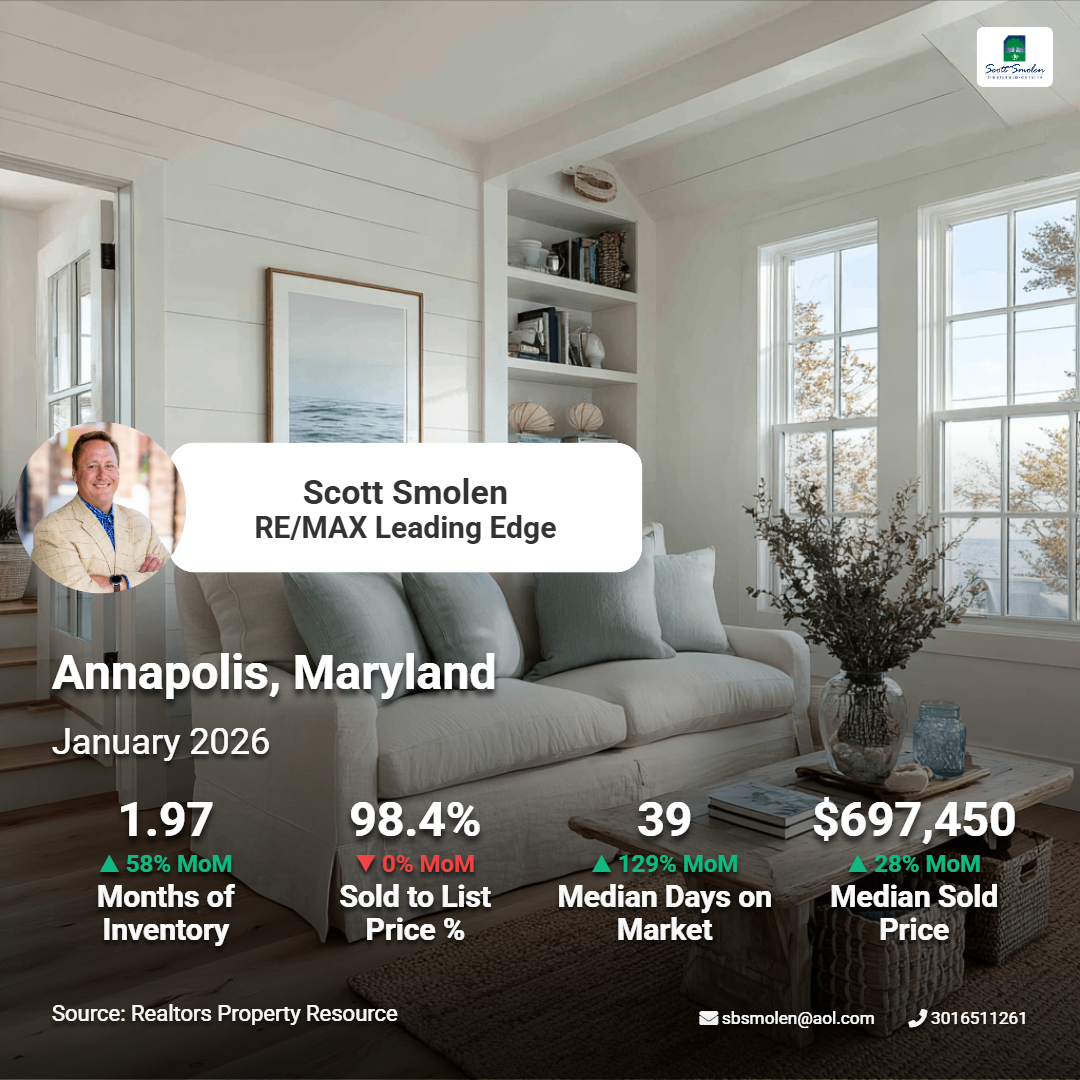
Annapolis MD Real Estate Market Update – January 2026

Local Housing Trends & Insights

The Annapolis real estate market is shifting as we begin 2026, creating new opportunities for both buyers and sellers. Recent data shows a more balanced environment compared to previous months, but strategy remains critical for anyone planning a move.

Here’s a breakdown of what’s happening right now and what it means if you’re considering buying or selling in Annapolis, Maryland.


Annapolis Housing Market Snapshot – January 2026

Current local data highlights several key trends:

  • Months of Inventory: 1.97 months (▲ 58% month-over-month)
  • Median Sold Price: $697,450 (▲ 28% MoM)
  • Sold-to-List Price Ratio: 98.4%
  • Median Days on Market: 39 days (▲ 129% MoM)

These numbers indicate a market that is becoming more balanced, offering opportunities on both sides of the transaction.


What This Means for Annapolis Home Sellers

Strong price growth continues to benefit sellers. A 28% increase in median sold prices suggests ongoing demand for homes across the Annapolis area. However, rising days on market signal a shift away from the ultra-fast pace seen previously.

Sellers who want the strongest results should focus on:

  • Strategic pricing based on current comparable sales
  • Professional marketing and presentation
  • Timing the listing launch for maximum exposure

With inventory still below two months, well-positioned homes can still attract strong buyer interest.


What Buyers Should Know About the Annapolis Market

Buyers are beginning to see more options as inventory increases. While Annapolis remains competitive, the rise in available homes may provide:

  • More selection across price ranges
  • Improved negotiating opportunities
  • Slightly less pressure compared to peak seller-market conditions

The key advantage comes from understanding which homes are priced realistically and acting quickly when the right opportunity appears.


Navigating Buying and Selling at the Same Time

Many Annapolis homeowners are coordinating both a sale and a purchase. In a transitioning market, careful planning helps reduce risk and stress.

A well-designed strategy can help you:

  • Maximize the value of your current home
  • Secure your next property with confidence
  • Avoid unnecessary timing gaps between transactions


Annapolis Real Estate Expert Insight

Local market knowledge makes a significant difference when conditions are changing. Understanding micro-trends, including neighborhood demand, pricing shifts, and buyer behavior, can help you make informed decisions.

If you’re thinking about buying, selling, or simply want to understand your home’s current value in Annapolis, reach out to Scott and The Smolen Team for a personalized strategy tailored to your goals. 


Feb. 16, 2026

What Do Home Inspectors Look for During an Inspection?

A home inspection is a standard, and strongly recommended part of the homebuying process. While buyers can waive the inspection contingency, doing so often means giving up valuable insight into a home’s true condition.

A certified home inspector evaluates a property’s major systems and structural components to identify safety concerns, functional issues, and potential future costs.


The Focus of a Home Inspection

Home inspections concentrate on the systems that most affect safety, performance, and long-term expenses. These typically include the structure, roof, electrical system, plumbing, and heating and cooling systems. Rather than documenting every cosmetic flaw, inspectors focus on issues that could impact livability, safety, or major repair costs. Minor wear and tear may still be noted, but it’s not the primary concern unless it signals a larger issue.


What Do Home Inspectors Look For?

Here are the main areas reviewed during a typical home inspection:

1. Roof Condition:  The roof is one of the most expensive components of a home and one of the first areas inspected. Inspectors look for damaged or missing shingles, worn flashing, soft spots, and signs of moisture intrusion that may indicate limited remaining lifespan.

2. Water and Moisture Issues:  Water damage can quietly affect a home’s value and safety. Inspectors check plumbing, windows, roof transitions, basements, and foundations for stains, peeling paint, wet insulation, and other signs of moisture intrusion.

3. Foundation and Structure:  Inspectors evaluate the foundation for cracks, uneven floors, gaps around doors and windows, leaning chimneys, and other indicators of structural movement or stress.

4. Electrical Systems:  Electrical systems are a major safety priority. Inspectors examine panels, outlets, wiring, and grounding, watching for outdated materials, overloaded panels, missing GFCI protection, and other fire or shock hazards.

5. Heating and Cooling Systems: Heating and cooling systems impact comfort and energy efficiency. Inspectors test system operation and airflow and look for rusted components, damaged ductwork, improper venting, or aging equipment.

6. Plumbing Systems:  Inspectors look for leaks, visible corrosion, outdated piping, running fixtures, and water pressure issues. Plumbing findings help identify both current problems and potential future repairs.

7. Pest or Wood-Destroying Damage:  Inspectors check for signs of pest activity or wood-destroying organisms, which can cause structural damage over time. Homes in humid areas are often more susceptible to these issues.


When Additional Inspections Are Needed

Some findings may require specialized inspections, such as stucco or moisture testing. These evaluations go beyond surface appearances and can uncover hidden issues that affect long-term durability.


Bottom Line

A home inspection provides buyers with a clearer understanding of a property’s condition. Not every finding is a deal-breaker, but inspection results help guide negotiations, repair decisions, and financial planning before closing. Even when not required by a lender, a home inspection is one of the best ways to protect your investment and move forward with confidence.

If you’re preparing to buy a home and have questions about inspection priorities, common issues in the local market, or need a trusted home inspector referral, contact Scott and the Smolen Team today. We’re happy to share guidance, help you understand inspection reports, and connect you with experienced local professionals so you can move forward with confidence.


Feb. 12, 2026

Home Insurance Costs Are Rising: What Buyers Need To Plan For

Buying a home is one of the largest financial decisions most people will ever make. Homeowner’s insurance plays a critical role in protecting that investment, not just the structure itself, but everything tied to it.

A standard homeowner’s insurance policy generally helps:

  • Cover repairs or rebuilding costs if your home is damaged by fire, storms, or other covered events
  • Protect personal belongings like furniture, electronics, and clothing in the event of damage or theft
  • Provide liability coverage if someone is injured on your property

That peace of mind is essential, but it’s also becoming more expensive.


Why Home Insurance Premiums Are Increasing

Home insurance costs have been rising nationwide, and there are clear reasons behind it.

Insurance providers are facing higher claim volumes due to more frequent and severe weather events. At the same time, the cost to repair or rebuild homes has increased significantly because of higher material and labor costs.

When insurers pay more to settle claims, those higher costs are passed on to homeowners in the form of increased premiums. Industry data shows just how sharp those increases have been:

  • 2023–2024: premiums rose by roughly 14% per year
  • 2025: increases slowed to around 10%
  • 2026–2027: projected increases of about 8% annually

While costs are still rising, the pace of those increases appears to be moderating.


How Rising Insurance Costs Affect Homebuyers

For buyers, homeowner’s insurance is more than just a line item, it directly impacts monthly affordability.

Your first year of insurance is typically paid as part of your closing costs, but after that it becomes an ongoing expense. Understanding current insurance trends helps buyers build a more accurate budget and avoid surprises after closing.

The key is planning ahead so you’re evaluating the full cost of homeownership, not just the mortgage payment.


Practical Ways Buyers Can Help Manage Insurance Costs

While buyers can’t control insurance market trends, there are steps that can help keep premiums in check:

  1. Shop around: Compare quotes from multiple insurance providers Bundle policies:
  2. Combining home and auto insurance often results in discounts
  3. Ask about discounts: Many buyers qualify for savings they don’t realize exist
  4. Highlight upgrades: New roofs, storm windows, or updated systems can lower premiums
  5. Maintain strong credit: Credit history can influence insurance pricing

Even small adjustments can add up to meaningful long-term savings.


Insurance Costs Vary by Location

Just like home prices, insurance costs vary based on location, price point, and the level of coverage required. Factors such as property value, proximity to water, local weather patterns, and construction type all influence premiums.

This is especially important for buyers comparing different neighborhoods or home styles within the same county.


The Bigger Picture for Buyers

While insurance costs are rising, mortgage rates have improved compared to recent highs. In many cases, a lower interest rate can help offset increases in taxes and insurance when the right loan strategy is in place.

The key for buyers is layering smart decisions:  financing, insurance, and long-term planning, rather than focusing on any single cost in isolation.


Bottom Line

Homeowner’s insurance is not an area to cut corners. It’s essential protection for what is likely your largest investment. If you’re planning to buy a home, understanding how insurance costs are changing, and how they fit into your overall budget, can help you move forward with confidence.

If you have questions about what insurance costs look like locally or how they factor into affordability in today’s market, contact Scott and the Smolen Team today. We’re happy to help you plan smart and avoid surprises!  We can also recommend a local, reputable insurance company to talk to!